

Abbie Green
Published on 26/06/2026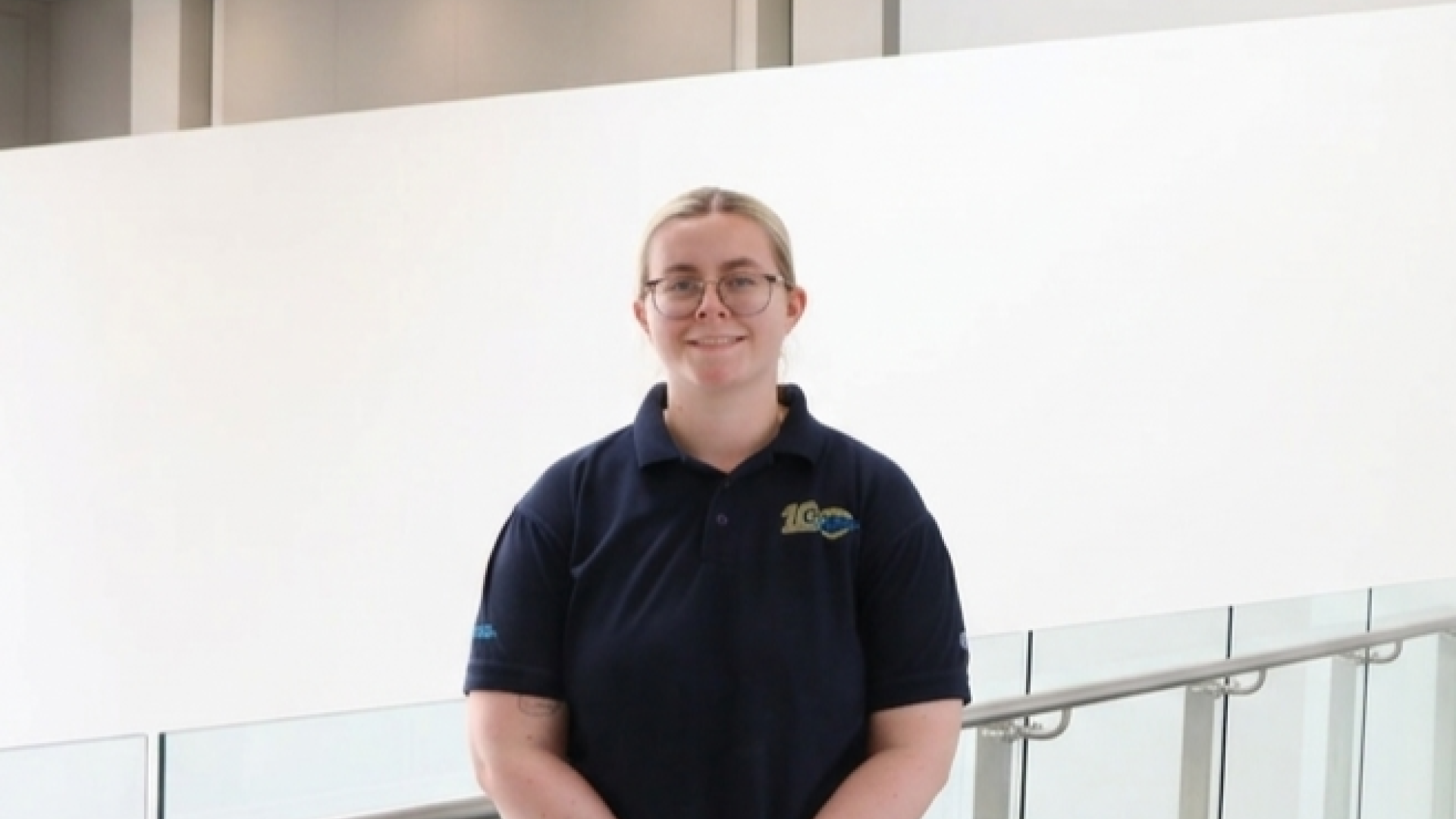
Abbie Green
Employer: Castings Technology
Job title: Lead process engineer
Course: Bachelor of Engineering (BEng) in Manufacturing Technology
Q.What inspired you to pursue a career in engineering?
I've always liked being practical. I used to help my dad fix things around the house, like door handles and toilet seats. And as a kid I was always drawing and designing.
When I was 16, I started a level 3 apprenticeship with Castings Technology and the University of Sheffield AMRC Training Centre, and now I’m studying for my degree on a level 6 apprenticeship.
Q.Why did an apprenticeship appeal to you?
I wanted to do something practical, not spend another three years in education. For engineering, apprenticeships are a better route than university. You get paid, you don’t have debt, and you get so much more experience.
You’re much more likely to get a job with an apprenticeship. I’ve never had any doubt that I will have a job at the end of this course.
Q.How is your apprenticeship giving you the skills and knowledge you need for a rewarding career?
It’s given me such a good background in the fundamentals of engineering. The AMRC Training Centre’s apprenticeships cover a broad range of skills. This year alone I’ve done electrical engineering, materials, operations management and a CAD project.
There are people on the course working in lots of different areas. I’m often bouncing ideas off other people on the course who are working for different companies but facing the same challenges.
It’s also really built up my confidence. When I started, as a 16-year-old I didn’t have the social skills to do the job. I’ve built up those skills through working at Castings Technology. When I started I would be scared to talk in meetings, but now I lead them. I present to the board, I have presented to the whole company, and I even manage my own apprentices.
Q.What is the best part about doing an apprenticeship at the AMRC Training Centre?
The facilities at the AMRC Training Centre are great. In the first year you learn shop floor skills like programming robots, CNC machining and 3D printing. It means that when you go to the workplace and see this equipment you’re not thinking, ‘I don't know what that is.’
Then you build on that in the classroom, learning about everything else you need to know in engineering like health and safety, quality and operations. Learning about all these aspects means you feel you can contribute to meetings when you’re back in the workplace. It all builds your confidence.
Q.What do you do in your job at Castings Technology?
I have been working here for seven years now while completing the different levels of apprenticeships. I’m currently a lead process engineer. Most of my time is spent on continuous improvement projects, analysing data and working closely with the technical department.
I now manage two apprentices of my own. In the long term, Castings Technology wants me to progress into a more senior position, so this is a really useful experience. The apprenticeship has given me a head start in my career progression. Thanks to the amount of experience I’ve had, I could be in a senior management role in my 20s.
Q.What advice would you give to other people looking to do an apprenticeship?
I would definitely recommend doing an apprenticeship with the AMRC Training Centre. My advice would be to find a company that’s committed to you and will give you a job at the end of it. Spend time talking to different companies. Ask them about career progression and about what has happened with their other apprentices. This will ensure you get the right place for you.
It certainly worked for me. I love working in Castings Technology and I can’t wait to continue my career here after I graduate.