

Phil Robson | Tutor
Published on 25/08/2026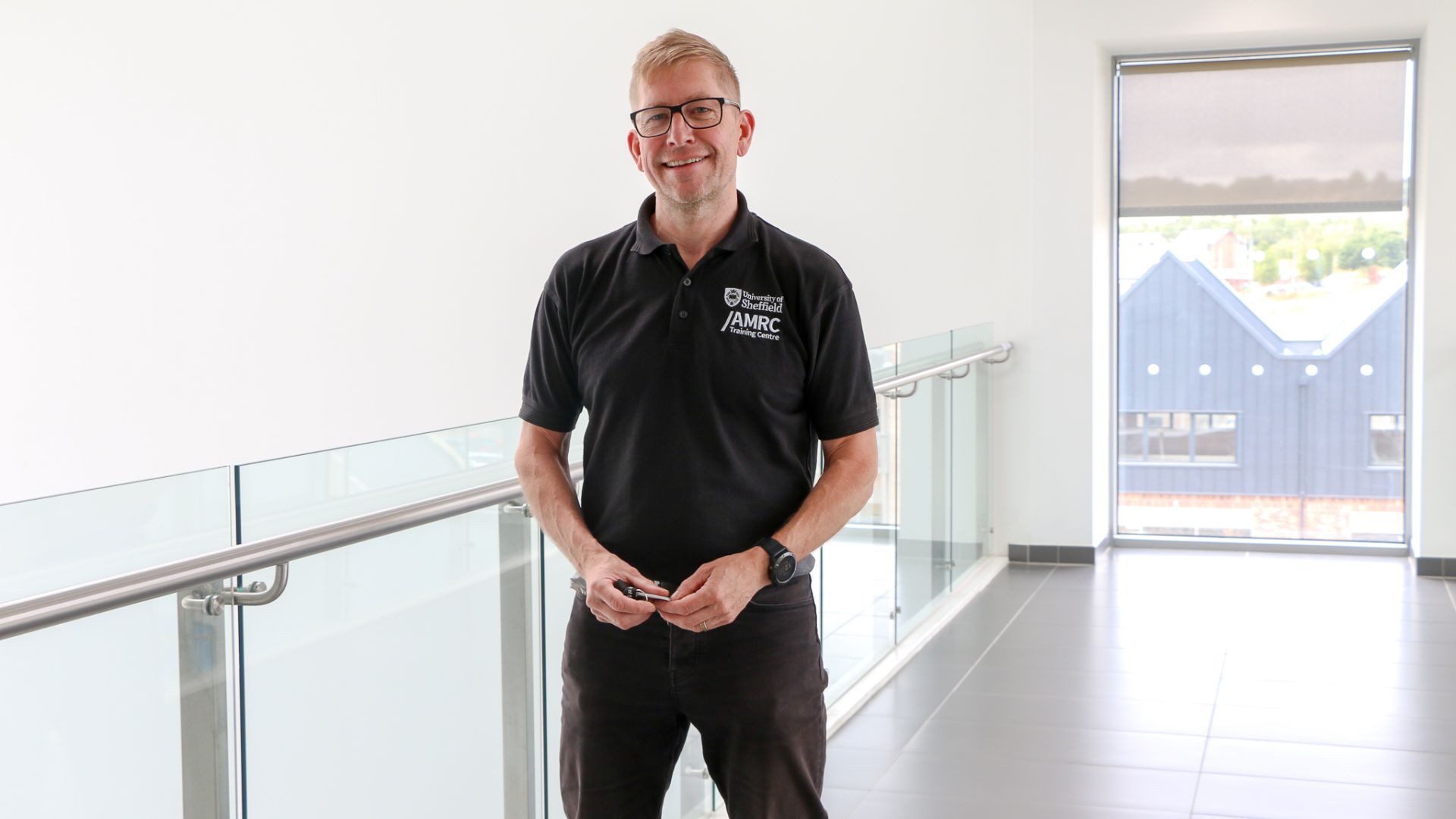
Phil Robson, development knowledge engineering tutor and interim curriculum manager.
What’s your career background?
After studying a degree in industrial design, I worked for ten years in civil engineering. I then had a career change and spent the next 22 years working as a design and technology teacher in a secondary school.
When I saw the opportunity to work as an engineering tutor at the University of Sheffield AMRC Training Centre it was a good way to use this mix of experience. Since starting here in 2024 I have developed the welding curriculum, working with workplace coaches, trainers and external companies, and used my teaching expertise to make it stick in the classroom.
Working with the workshop trainer and going out with the workplace coaches to see our apprentices on placement has given me a lot of knowledge about the industry.
What made you want to work at the University of Sheffield AMRC Training Centre?
After 22 years as a secondary school teacher I was heading for burnout. I wanted something new, to wake up in the morning and want to come into work. That's what I have here. I love working with the apprentices and the working environment is a lot more rewarding.
Some school teachers are reluctant to apply for jobs here because they don't think they can teach at a university level, but they can. I was teaching 16-to-18-year-olds before, and I still am now. The transition has been manageable, and my years of experience in the classroom have been very useful to this role.
What does the day-to-day job look like for you?
I deliver sessions for the apprentices and then recap them while they carry out practical work. We work on retrieval techniques to get them to articulate what they've learned, and help them complete their assessments.
The teaching is 8am to 4.45pm, a longer day than when I was in the school, but I’m less tired as I can dictate the pace. I also have flexibility to work from home on non-teaching days so I see a lot more of my family.
Advanced manufacturing is moving so fast with automation, robotics, and net-zero initiatives. How does the AMRC Training Centre support you to keep your own skills at the cutting edge?
We are offered regular continuing professional development (CPD) courses. You can train in any area we deliver at the centre, so for example if I want to learn about manual machining I can. Likewise, I can also learn how to use the 3D printers.
We’re also encouraged to go and see the companies that we work with. That is eye-opening, because we have a range of stakeholders, all the way from small businesses to companies making high-end technology for global manufacturing.
On visits to apprentices I see a range of different welding techniques and manufacturing processes in areas like the aerospace industry. I have observed things like cobot welding, fully automated welding and electron beam welding. I’ve seen fully automated stock control in the food and drink sector. You see these factories and think, ‘Wow, so that's how it's made.’
What equipment do your apprentices like using the most in our purpose-built facility?
The apprentices really enjoy working with robots. They get to manipulate and control them. They also love using the 3D printers, printing parts that interact and move with themselves.
We work with massive global powerhouses like McLaren and Rolls-Royce, as well as local SMEs. What’s it like seeing an apprentice you trained go on to make a direct impact at companies?
It makes me very proud to see apprentices go on to succeed in the workplace. Many are going from hands-on welding to executive roles and having a massive impact on the development of their business.
A lot of SMEs want to diversify, and our apprentices are often put in charge of establishing new aspects of the business. I think that's down to the experience they've had here and the high expectations we have of them. We deliver a module on project management, and bringing the theory and practice together helps us make the leaders of the future.
What is the most rewarding part of working here?
It’s the relationships you build with the apprentices. I love seeing them thrive and wanting to achieve their best. I see many of my apprentices as role models around the centre, and the most rewarding thing is to know you've played a part in that.